This is the first post in my series about authors and books based in Michigan, my home state.
I met my guest today, B.R. Bates, at an author event at my local library. After our meeting, I picked up one of her books on Kindle and have started reading it. The story is fascinating. I’ll let her tell you about it in her own words.
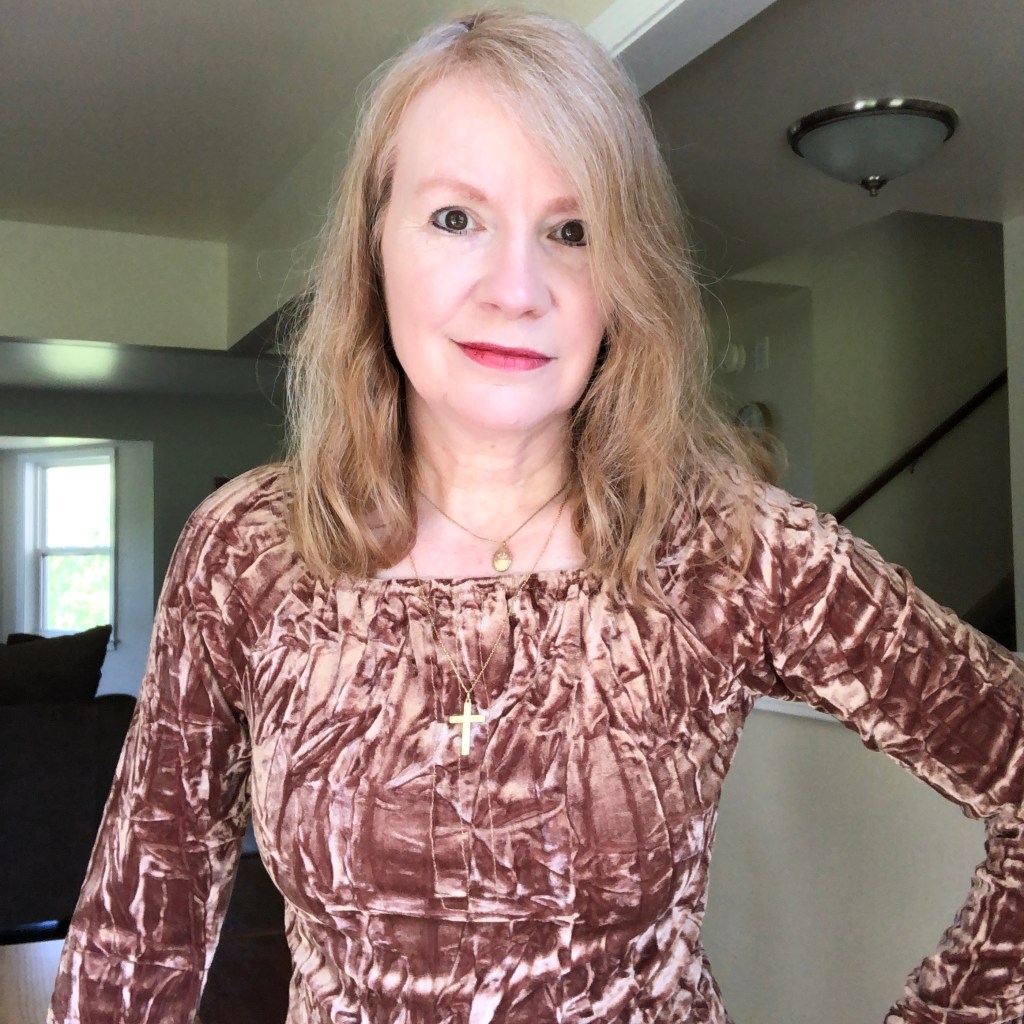
Carol: B.R., thank you for being my guest today. Let’s start off with you telling us a bit about yourself:
B.R. Bates: I am a writer based in Michigan, specifically the larger Detroit area. I grew up in a small town in mid-Michigan. I’ve been a writer all of my life, since I first learned penmanship, actually, and I pasted together ruled sheets of paper to make my first “book.” Since then, I’ve written a little bit of everything – poetry and short stories in my earlier years, then novels, then I spent much of my career researching and writing pop-culture reference books on classic TV shows. More recently I have done two true-crime books on convicted Detroit serial killers. All through the years of my writing career, I’ve also done writing and communications for my “day job,” working in daily newspapers for about a decade, then branching out to the corporate world, then to ministry work in the South for a few years, then to federal government web management on the East Coast. So I’ve lived all over the place and worked in a variety of fields, and writing has been a constant in my life.
Carol: What are your books about?
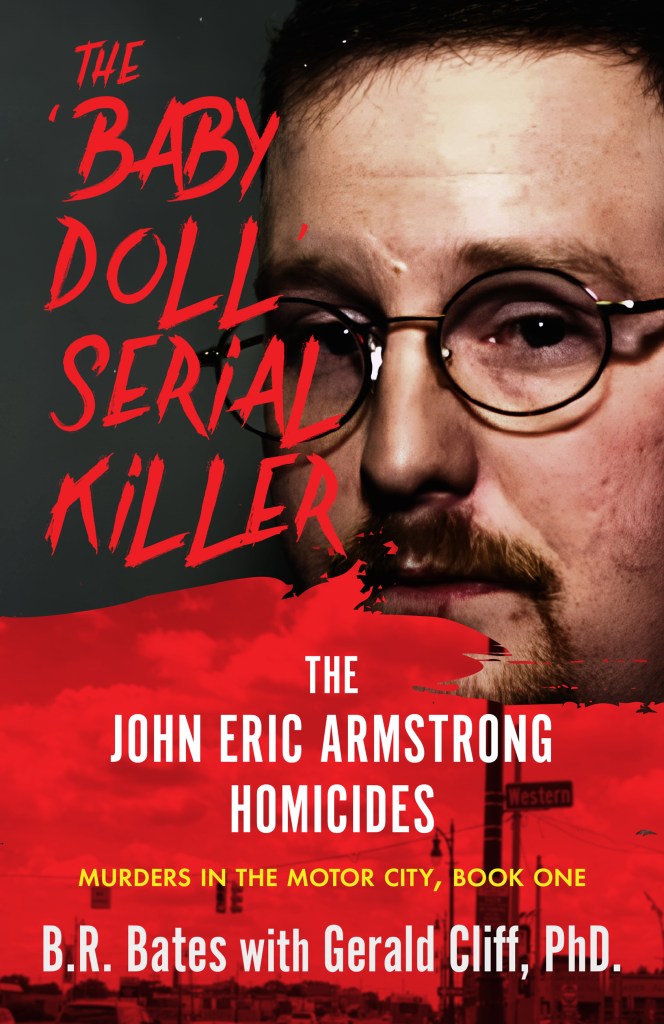
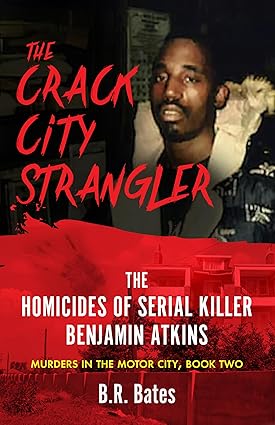
B.R. Bates: The true-crime books are “The ‘Baby Doll’ Serial Killer: The John Eric Armstrong Homicides” and “The Crack City Strangler: The Homicides of Serial Killer Benjamin Atkins.” They explore the cases of these two convicted serials. Armstrong was known to kill five women in Detroit, but he also assaulted five others who survived, which is an unusual ratio for a serial. The thing that people tend to remember about this case is that after he was arrested in Detroit in April 2000, he confessed to killing 10 others around the world while traveling with the U.S. Navy aboard the USS Nimitz. That idea of a traveling naval killer has been adopted as a storyline for a few different TV crime dramas, inspired by this case.
In the other book, Atkins was dubbed the country’s fastest-moving serial when he was arrested in August 1992. He was known to kill 11 women in a timeframe that could have been as short as six months. The local papers at the time were calling him the Woodward Corridor Killer and the Woodward Strangler, but a paper in Canada – before he was identified and arrested – referred to this killer terrorizing Detroit as the Crack City Strangler. That’s an interesting perspective for them to take, and my publisher felt that really captured it, so thus the title of the book. I love Detroit and would never think of it as “Crack City,” but from a sociological perspective, I guess it was an interesting way in which this case was viewed at the time. Crack was a significant part of this case.
Carol: I’m a fan of true stories and suspense novels, so I picked up your book, The ‘Baby Doll’ Serial Killer on Kindle. I’ve started reading it. Your details and the interviews with family members of the victims are fascinating.
Now for some questions our readers want to know:
1. Are you a night owl or morning person?
I am definitely a morning person. I can get up and go, and I do my best work early in the day. That’s how I’ve always been. I wind down in the evening, maybe watching a little TV then crawling into bed with a book around 8 or 8:30 p.m., where I read until 9:30 or 10 p.m. Then I’m out! If I am ever away from home past 10 p.m., boy, am I struggling! LOL.
2. Do you experience writer’s block? What do you do to get through it?
Believe it or not, I never get writer’s block. I can always write. It’s like breathing to me. I always see writing as getting your thoughts onto the page, not worrying about it being perfect, and refining it later. I think some writers get bogged down – maybe just subconsciously – in the idea that it has to be perfect at the get-go. That paralyzes them. I learned in journalism school that you just start writing, because there’s an editing process, so don’t worry about perfection. Start writing and let it flow, then work out what needs to be worked out later. That’s how I advise people, because I am always hearing from people who want to write a book. It seems like it’s human nature, to want to write a book. But I’ve heard from some folks who don’t know how to start it. I always tell them, start anywhere – start in the middle, if you want. If you know you want to include a certain story or bit, write that first, even if it goes in the middle. Just get it down, then go back and write the beginning, or the end. Just start writing, and the wonderful thing about Microsoft Word (and hey, I first learned on an actual typewriter all those years ago!) is that you can go back and edit so easily! You can copy and paste, you can delete. So just write.
Carol: These are great tips. I’m one of those writers who want to get it right the first time, so I can take this advice to heart.
3. Were there any surprises that came up as you wrote your story?
I think the thing that surprised me the most about my research into these two serial killers was how much I related to the victims. I knew I wanted to make these books very victim-centric, and that’s why they both begin with chapters focusing on each one of the victims. Beyond that, though, I am the same age that many of the victims would be right now, even though these two killers operated at different times. It was very much a case of “there but by the grace of God go I,” because my upbringing was not the best. There could have been a wrong turn or two in my life that sent me in that direction. These were women living at risk on the street. Most of them were drug-addicted. They were not out there by choice. They were there because of circumstances, and often it was circumstances beyond their control.
These females present a challenge to the reader, and I hate to say that many people fail that challenge. Do we value all human life, or just the life that fits with our sense of right and wrong? Does the Lord love everybody? Did He die for everybody? Was He maybe punishing them for their life choices? These are tough questions, and I think we resist confronting them on a conscious level. We don’t realize when we’re judging, half the time.
One of the survivors of Armstrong, her name is Zelda, is a true champion for the Lord these days. She lives in victory. She knows she has been delivered, and she sings it all day long. She witnesses. She touches other people’s lives. She’s the one I think of as a true success story, because she knows exactly what she was delivered from. It’s like the parable in Luke 7 about the person who was forgiven for the greatest debt. I’m very inspired by that. I know another survivor of Armstrong who has really struggled over the years. She’s a friend of mine now, and I hear from her often, and I pray for her (and I hope readers will, too). I believe the Lord can work just as strongly in her life. I have also become a friend of one of Atkins’ survivors, and she is perhaps somewhere in the middle. She is strong, but it hasn’t been easy for her. But the greatest challenges have the greatest rewards, right? I think for me the biggest reward of doing these two books has been getting to know these three survivors, who have, in ways large and small, turned their lives around and made something different from them, despite whatever circumstances.
Carol: It’s amazing that you have gotten to know the survivors during the writing process. I’m glad they are finding their paths to healing. We can all learn something positive from their stories.
4. Do you reward yourself when a book is finished? If so, what is your favorite treat?
You know, I do reward myself when there has been an accomplishment, or when something good has happened. I used to reward myself each time I moved up to a better job through my 20s and 30s. When I got my job at The Detroit News, I went to the mall and bought a black leather biker-type jacket at the Wilson leather shop. I’ve gone to the Tiff and Co. at Somerset mall in Troy to buy myself something as a reward. I think that’s important. I have a strong work ethic – I can work, work, work. And I think to reward yourself is a reminder to slow down and smell the roses, as they say. To take stock and let your foot off the gas once in a while, because sometimes you can drive yourself too hard.
5. What are your three favorite books?
The most life-changing book I’ve read is the Bible, first and foremost – I have read it over and over again, at a slow rate, about a chapter a day, throughout my life. And I alternate between different Bibles. My boss at my job in D.C. gave me a chronological Bible, and that’s a really interesting way to read the Scriptures – I’ve gone through that Bible a couple times. I have various translations of the Bible, and I recently got a Catholic Bible and an Ethiopian Bible. I think when I finish the latest translation I’ve been reading, I’m going to start the Ethiopian Bible, because I’m intrigued to discover what it has that my traditional Bible does not, and why. Same thing with the Catholic Bible – I’ve never read those extra books it has, since I grew up Protestant. I’ve always been curious about them.
As far as other books, I was profoundly affected and awed by these two books when I read them for college literature courses: “Notes from Underground” by Dostoevsky and “The Stranger” by Camus.
And our final question from readers, if you didn’t write books, what would you do for a living?
If I had not gone into journalism in college, and if I had not been writing all these years, I would have gone into the psychology field. Psychology, and even sociology, have always deeply fascinated me. I love studying people and why they do the things they do. I took a couple courses in college, and I actually got out those old college textbooks a few months ago and read them over. (Yes, reading a textbook when I didn’t have to, LOL.) I have often in my life cited the basic psychological terms I learned in those courses, and I know they have informed my creative writing, if not my true-crime writing, as well.
Carol: I’ve very much enjoyed our interview and getting to know about you as an author. I know my readers will want to find out more about you and your books.
Before we go, where can readers find you online?
I have a website at BRBates.com, and I do a blog at br-bates.blogspot.com, where I do a series I call “Killer Comparisons” – I compare another serial killer in our cultural history with one of the two Detroit serials I have researched. I find great value – from that psychological perspective that I love so much – in seeing how the backgrounds of these serials are similar or different. It’s all about answering the million-dollar question of why they cross that line to take human life. Is it nature or nurture? Those are the ideas I tackle with Killer Comparisons.
I am also on various social media:
https://www.instagram.com/brbates.author

