Today I’m chatting with author friend, Christina Sinisi about her journey through the cookbook:
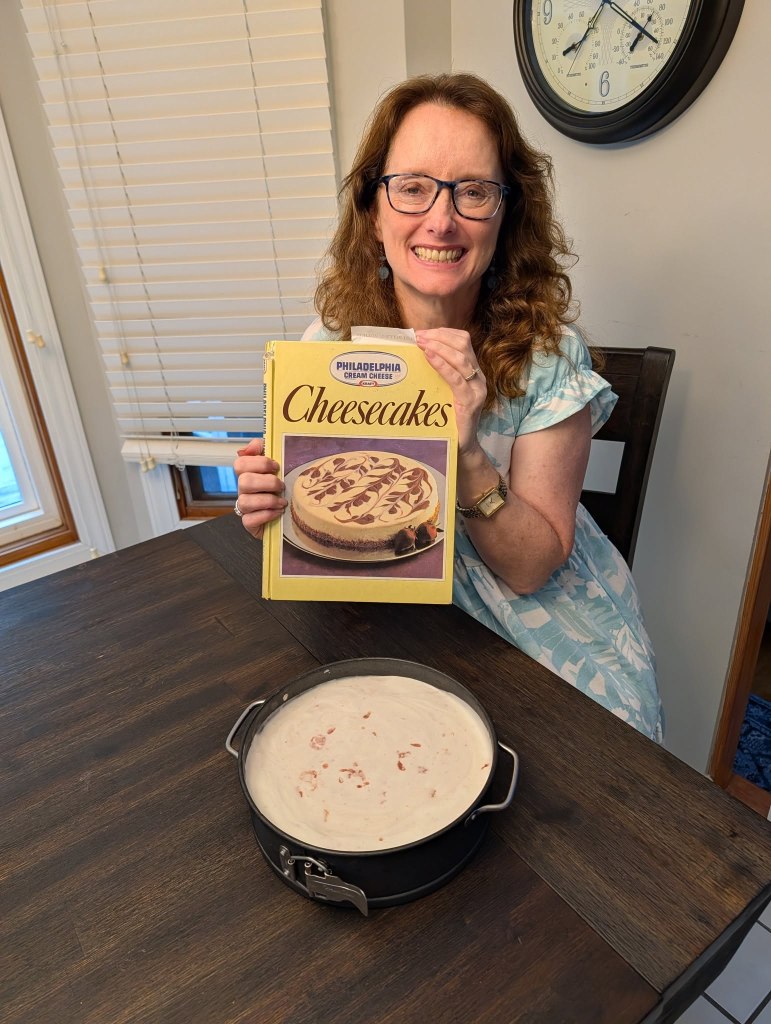
Philadelphia Cream Cheese: Cheesecakes.
Christina, I recently caught your post on Facebook where you showed a recipe book and mentioned that you have made every recipe in that book.
I found that idea fascinating. Especially since cheesecake is my favorite dessert!
What prompted you to start this journey?
First, thank you very much for inviting me to be on your blog, Carol. I didn’t plan on starting this journey, as a child, I didn’t even like cheesecake because I’d only had the kind out of a box. However, I have always loved to cook. And I’m an organized person (cough, cough, recently got called a control freak). So, when I make a new recipe (which is all the time), I write the date and notes. That’s how I started on this journey.
Why did you choose this recipe book?
In my job as a psychology professor, I am the advisor of the Psychology Club. At some point, decades ago, I made cheesecake for a club event and they loved it! It’s now become a tradition and students tell each other about Dr. Sinisi’s cheesecake. So, maybe the book chose me?
What was one of your favorite recipes?
In this cookbook (Philadelphia Cream Cheese Cheesecakes), I love the basic NY style cheesecake because it is so versatile.
How long did it take you to complete baking every recipe?
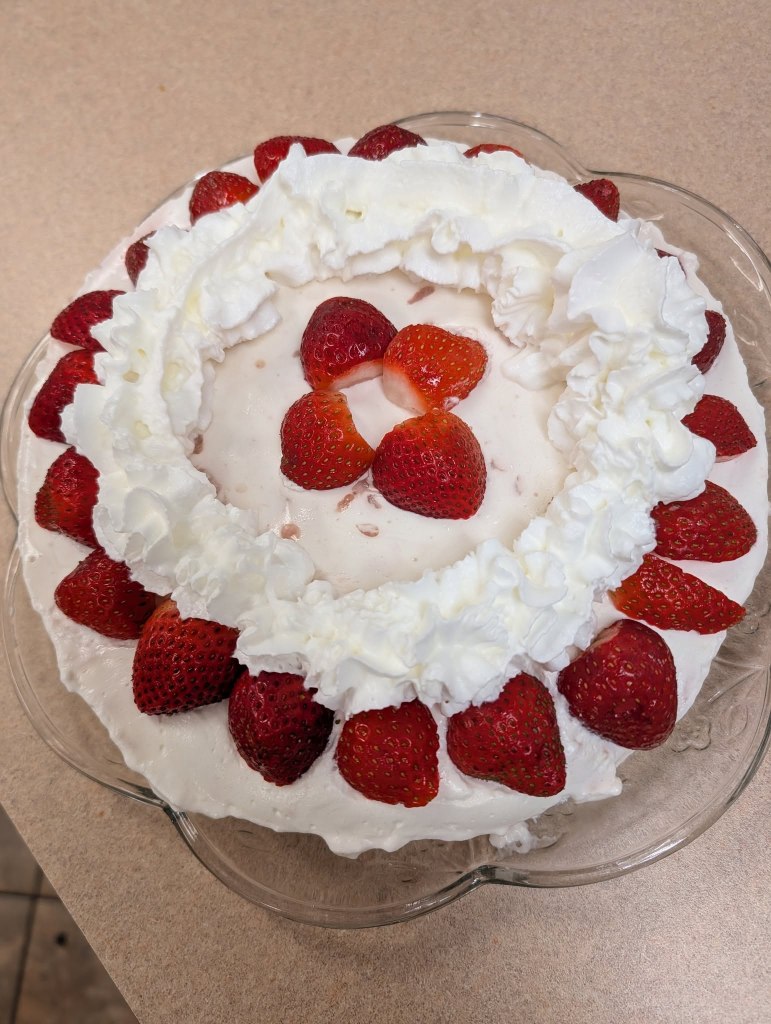
I first made the Northwest Cheesecake Supreme (the basic NY-style cheesecake) in 1991! I just made the last recipe (Very Smooth Cheesecake—a strawberry non-bake) this last month. That one was left last because I had to get creative—it called for a 10-ounce box of frozen strawberries—no one sells that anymore. All the fruit is in bags, so I purchased a bag and measured out the amount I needed.
Is this something you have done before, or a journey that you will undertake again?
I am working on several others, believe it or not. I have a Junior League of Lynchburg, VA cookbook I was given as a wedding present and I’ve made maybe 2/3 of those. More recently, I was given a Joanna Gaines Magnolia Table cookbook that I’ve also made most of the recipes—we just have the same tastes!
And, what I want to know: Who were your taste testers? That sounds like a job I would have really liked!
Decades of students, my family, and my church. Some recipes have been repeated many times and others were one and done. I may also have made sure to at least have tasted every recipe!
Christina, thank you for sharing your milestone with us.
Now let’s talk fiction.What do you have going on in your author world?
I am writing and hope to publish the third book in the Outerbank series, Hope of Hatteras. Look for that coming this fall!
Thank you again for being my guest today, Christina.
Blessings to you on all of your adventures going forward!
Christina Sinisi has authored several books including a romance called Sweet Summer:
Shelby Marano is the youngest of three sisters and was always Daddy’s baby girl—until her father was murdered when she was only eight years old. Ever since, she’s been running from anyone or anything that could truly hurt her. Instead, she seeks calculated thrills that leave her exhilarated, but when she’s caught outside during a summer storm, she quickly realizes not all adventures are within her control.
Tyler Burgess struggles with the responsibility of caring for a mother suffering from Alzheimer’s disease. Forced to take a leave of absence from work and put his life on hold, his only reprieve is the volunteer work he does at the local museum. When a soaking-wet Shelby barges in, he offers her both refuge from the rain and a safe place to land. She’s the breath of fresh air he didn’t know he needed.
Tyler proves to be much more than just a nerd in a history museum, but what she finds out about him is a dealbreaker for her. As family health issues and an unknown stalker threaten Shelby’s perfect little world, she learns a hard lesson: no one can hide from the dangers of life. Can Shelby let her sisters, Tyler, and even more importantly, God, show her in one Sweet Summer that love is worth taking the risk?
For more information about author Christina Sinisi and her Sweet Summer e-book: https://bit.ly/4uUoEDG
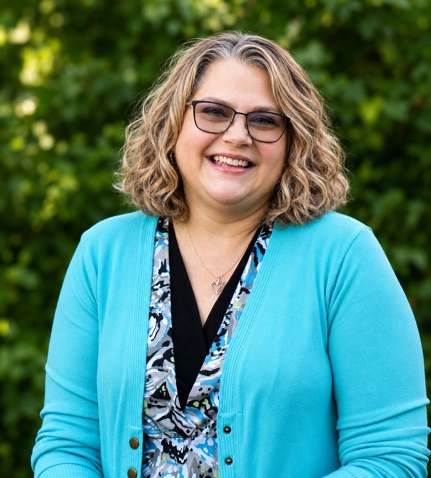
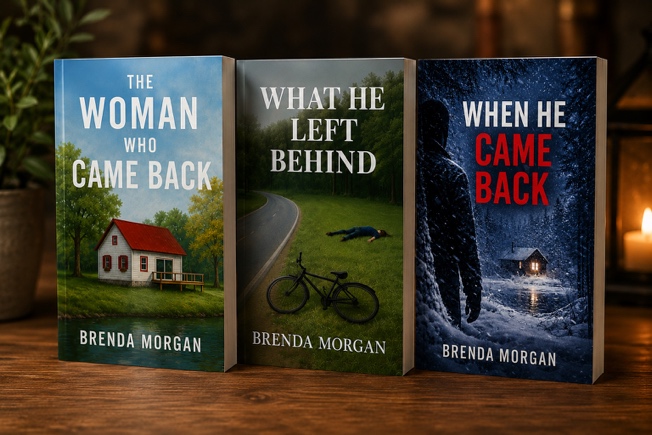
My interview today is with Michigan author Brenda Morgan. I’ve known who Brenda is because she lives just down the road from me. However, until we met up at a library event, I wasn’t aware that she is also a published author. I’ve invited Brenda to be my guest today to find out more about her journey and her latest book.
Brenda, thank you for joining me today. Tell us a little bit about yourself.
I’m Brenda Morgan, a Michigan-based suspense and psychological thriller author who loves writing stories about strong women overcoming impossible situations. Before becoming an author, I spent more than ten years as a teacher, and now I balance writing with helping my daughter run her candle business, Candles by Madison, and babysitting my granddaughter.
I’m the author of The Woman Who Came Back and What He Left Behind, with my third novel, When He Came Back, on the way. My books are set in small-town Michigan and combine emotional storytelling, suspense, mystery, and psychological twists. When I’m not writing, you can usually find me with a cup of coffee, spending time with my family, or curled up with one of my pets and a good book.
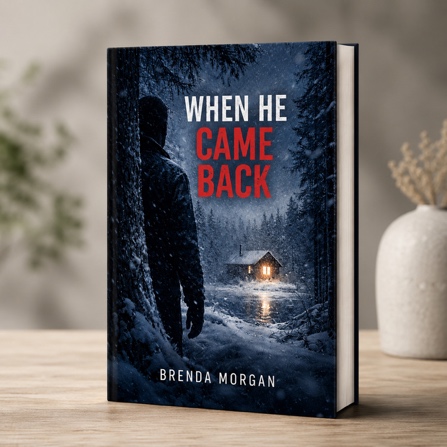
We’re here to talk about your newest book, When He Came Back. What is your book about?
When He Came Back is the third book in my suspense series that began with The Woman Who Came Back and continued with What He Left Behind. The new novel brings together characters from both previous books as past trauma, hidden secrets, and unfinished battles collide.
After surviving years of captivity in the first book, Liz believed her abductor was finally behind bars for good. But when he escapes before sentencing, fear returns stronger than ever and the people closest to Liz become targets. Joined by Krista and Detective Charlie—characters readers first met in What He Left Behind—the group must work together to stop a man determined to destroy the lives they fought so hard to rebuild.
Now for some questions that my readers like to ask:
What was the catalyst for your interest in writing?
What first sparked my interest in writing was actually teaching. I loved teaching, but it could also be very stressful, and many nights I had trouble falling asleep because my mind was still going. To relax, I would make up stories in my head while lying in bed. Each night, I’d continue building on the story I had imagined the night before, adding new scenes and ideas as I went along.
At the time, they were pretty simple and still just the skeleton of stories, but that’s really where my writing began. Even now, I still have several story ideas written down as short summaries waiting to someday become full novels.
After I retired from teaching, I read books by a few local indie authors and started wondering if maybe I could write one too. At first, I only told a few close family members because I honestly wasn’t sure if I could do it. But once I finished my first book and shared it with others, people were surprised by what I had created—and that gave me the confidence to keep writing.
Do you reward yourself when a book is finished? If so, what is your favorite treat?
I do reward myself when I finish a book, but it usually isn’t with food or a special treat. Instead, I completely rearrange my office. About two-thirds of the way through writing a book, I always seem to get restless with my workspace and start wanting a change.
Once the book is finished, moving everything around and creating a fresh setup feels like a reset before starting the next project. Since I spend so much time in my office writing, having a cozy and inspiring space is important to me, and changing it up always feels rewarding after finishing a manuscript.
Were there any surprises that came up as you wrote your story?
There are always surprises when I’m writing. I usually begin with an ending in mind and include it in my outline, but by the time I reach the final chapters, the ending is often completely different from what I originally planned. Sometimes it changes so much that it barely resembles the first idea at all.
With When He Came Back, the ending evolved in a major way as I wrote. I also had conversations with readers of my first two books, and hearing their thoughts, theories, and hopes for the characters really inspired me. I love listening to what readers connect with and what they would like to see happen next. While I still stay true to the story I want to tell, those conversations definitely helped shape parts of the book—especially the ending.
Who was your favorite character to create?
My favorite character to create has been Liz. She was the main character in The Woman Who Came Back and returns as one of the central characters in When He Came Back. When I finished writing my first book, I never planned for her story to continue beyond that novel.
While writing my second book, What He Left Behind, I realized the characters were in the perfect town and situation for Liz to naturally appear, so I decided to bring her back for a small part in the story. After that, I discovered that readers loved and missed Liz just as much as I did, and many asked if they would ever get more of her story. That ultimately inspired the idea for When He Came Back.
Liz has become a character that feels very real to me, and as long as I continue writing books in this series and setting, I think she will always find a way to appear.
Are you a plotter or a pantser?
I’m probably a mix of both. I usually start with a basic outline of where I think the story is going and the major things I want to happen. It’s not overly detailed, but it gives me direction and helps me feel more organized before I begin writing.
Once I start writing, though, the story tends to take on a life of its own. Things happen sooner or later than I originally planned, scenes get removed, and characters sometimes change completely. In What He Left Behind, Kevin was originally supposed to be a good guy, but as I wrote, his character evolved into someone very different.
For me, writing is almost like watching a movie play out in my mind while I type. The story unfolds scene by scene, and I discover parts of it alongside the characters. When I get stuck, I go back to my outline, adjust it to fit the changes I’ve made, and keep moving forward. By the end, the story has usually transformed quite a bit from where it originally started—and that’s one of my favorite parts of the process.
What does your family think of your writing?
My family has been incredibly supportive of my writing journey. My husband and I were both teachers for many years, and he has become one of my biggest supporters by helping with editing and proofreading my books. My daughter also plays a huge role by helping with marketing, social media, and encouraging me every step of the way.
I’m also very lucky to have other family members willing to read my work before publication. My mom, sister-in-law, cousin, mother-in-law, and several others have all helped by proofreading, editing, and giving honest feedback about different parts of the story. Having that kind of support system has meant so much to me as an indie author.
Do you experience writer’s block?
So far, I really haven’t experienced writer’s block. I think part of that is because I always have an outline to fall back on if I get stuck or need direction. Most of the time, my challenge isn’t a lack of ideas—it’s finding enough uninterrupted time to write.
I babysit my granddaughter most days, so my writing time during the week can be limited. I’m not much of a morning person or a night owl, so daytime is usually when I write best. Whenever possible, I try to carve out longer stretches of writing time on weekends because I love becoming completely immersed in the story. Those are the moments when the book really comes alive for me and the scenes play out almost like a movie in my mind.
Brenda, thanks again for being my guest.
What’s next for you as an author?
After the release of When He Came Back, I plan to continue expanding the series and following several of the characters readers have connected with throughout my books. While Liz and her family will still appear, future stories will focus more heavily on Krista, Charlie, Nick, and new characters as they investigate crimes and uncover secrets in small-town Michigan communities.
I’m excited to continue blending suspense, emotional storytelling, and psychological twists while creating strong, realistic characters readers can grow with from book to book. My goal is to keep building a connected world where each story can stand on its own, but longtime readers are rewarded by seeing familiar faces return and evolve over time.
Where can our readers find out more about you?
Readers can find me online through my Linktree: https://linktr.ee/BrendaMorganAuthor It’s the main hub for everything related to my books, including my website, social media pages, places to purchase my novels, and links to leave reviews. It’s the easiest way to stay connected and follow along with new releases and updates.
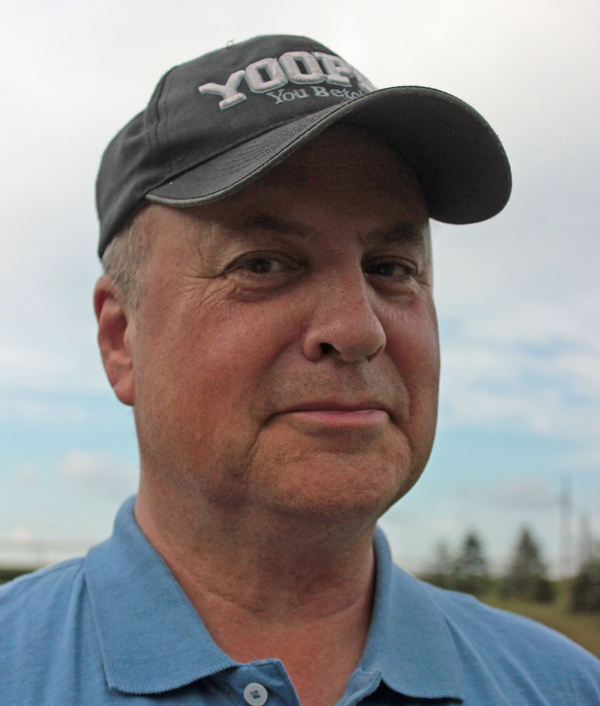
My guest today is an author from my home state of Michigan whom I met at the local library event in April. I’m impressed with the details in his books and how many of them he has published.
I’ve asked the author to tell us about himself and his books.
My name is Dana Kenneth Johnson – author, publisher, photographer, historian, and educational media producer, born in the U.P. but now living with my high school sweetheart and wife Ruth near Gowen, about 30 miles northeast of Grand Rapids.
I graduated from Vestaburg High School in 1972 and have a college degree in Education Media Technology from Ferris State College (1975) and in Business Equipment Service Technology from Central Oregon Community College (1989), but my passion is in rediscovering Michigan’s lost history, exploring its many ghost towns, and finding historic old schoolhouses.
Altogether, I’ve published over 50 books on Michigan historical places and people, all of which are listed on the following pages and available to purchase on Amazon.com.
I travel extensively around the state to find, firsthand, the hidden historical treasures that await rediscovery in each county.
On one excursion, I spent an entire day – 14 hours – and drove 350 miles zigzagging north to south through Gratiot County to document and photograph every standing schoolhouse I could find, (39 remaining of the 184 that once stood in the county.) I’ve devoted similar energy and resources to do the same in Barry, Ionia, Kent, Montcalm, Muskegon, Oceana and Ottawa Counties. The result is “The Old School Project,” a series of books documenting the historic schools in each of those counties. Since then, I’ve started a series entitled “Michigan’s Lost, Forgotten & Unforgettable Places” which explores villages, hamlets, cities and historic sites – past and present – by county. My goal is to publish a book on every one of Michigan’s 83 counties. So far, I’ve covered 33 of them.
I have produced several series of PowerPoint presentations on historic schools, abandoned sites, rural communities, and ghost towns around West Central Michigan, and would delight in presenting them to groups in your area.
I also publish a bimonthly (6 issues a year) newsletter on Montcalm County History, with PDF format available free by email, or $12 per year for printed copy by USPS.
What is your book about?
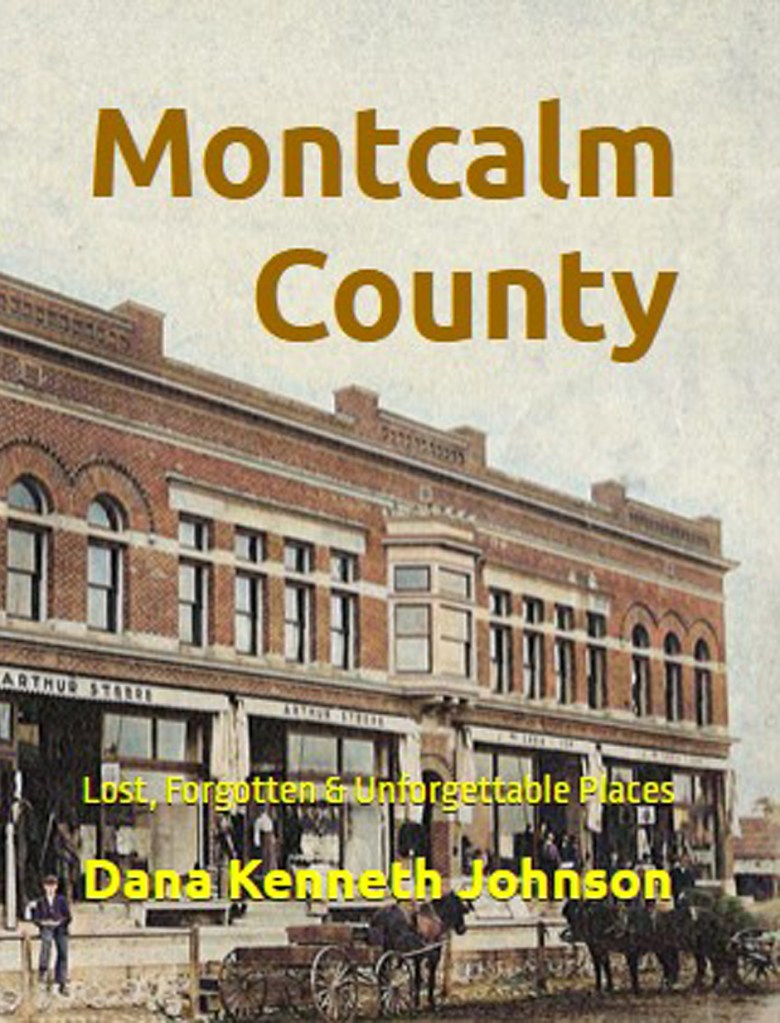
Montcalm County Lost Forgotten & Unforgettable Places – The first book I published in the Lost, Forgotten & Unforgettable Places series was “Montcalm County Lost, Forgotten & Unforgettable Places” about the towns and sites in the county where I grew up and again live after returning from Oregon. It documents over 70 such sites in the county in current full-color and vintage photos, old and current maps, and a history of each place. The first edition was 75 pages, published in 2022. The latest edition, published in May 2024, is 360 pages, including a comprehensive index.
What was the catlyst and inspiration for your book?
My interest in Michigan history began in 1985 when I moved from Michigan to Central Oregon and found such spectacular scenic beauty that I felt compelled to photograph it. Beginning with natural settings such as rivers, lakes, mountains, falls and forests, flora and fauna, I found the architecture equally intriguing, especially regarding the old Reid School in Bend that had been preserved as the Des Chutes Historical Museum.
When I came back to Michigan in 2014, I continued photographing old schools, along with other historic buildings and sites. My interest grew as I discovered more and more of those old school houses still standing, in various states of repair or disrepair.
Further investigation included finding the history of each school and discovering their locations from old plat maps. Inevitably, I realized that these buildings needed to be documented before they were lost to history and the elements, so I started compiling books, starting with Montcalm County, since that’s where I live. After publishing eleven books on historic schools, I expanded into historic rail stops, villages, towns, cities and sites in Michigan’s 83 counties. So far, I’ve covered 33 of them.
How do you find so much time to gather information and write?
After working in over 40 jobs between 1975 and 2014 when I retired, I devoted my free time to compiling information on Michigan’s historic places by county.
Were there any surprises as you wrote this book?
I had been aware of the term “podunk” as it refers to backwater towns and out-of-the-way hamlets, but it was only upon examining various old maps that I discovered that Michigan had ten towns that were actually named Podunk, including one in the southeast corner of Montcalm County.
Do you experience writer’s block?
Writer’s Block? – No such thing! Researching the history of each place in each county is just a matter of digging into old maps and photos, extrapolating their locations on modern maps, researching their history, and visiting the site to see what’s there, sometimes finding no trace remaining, and other times finding a thriving town or city.
What’s next for you as an author?
To publish a book on places in every county in Michigan, all 83 of them. I have 50 more to go.
Thank you for joining me today. Where can readers find you online?
This is the link the author’s book about Mecosta County, where my home is. It was fun to look up my little village and read details about its history. I’m impressed with the amount of research he has put into each book.
This is the first post in my series about authors and books based in Michigan, my home state.
I met my guest today, B.R. Bates, at an author event at my local library. After our meeting, I picked up one of her books on Kindle and have started reading it. The story is fascinating. I’ll let her tell you about it in her own words.
Carol: B.R., thank you for being my guest today. Let’s start off with you telling us a bit about yourself:
B.R. Bates: I am a writer based in Michigan, specifically the larger Detroit area. I grew up in a small town in mid-Michigan. I’ve been a writer all of my life, since I first learned penmanship, actually, and I pasted together ruled sheets of paper to make my first “book.” Since then, I’ve written a little bit of everything – poetry and short stories in my earlier years, then novels, then I spent much of my career researching and writing pop-culture reference books on classic TV shows. More recently I have done two true-crime books on convicted Detroit serial killers. All through the years of my writing career, I’ve also done writing and communications for my “day job,” working in daily newspapers for about a decade, then branching out to the corporate world, then to ministry work in the South for a few years, then to federal government web management on the East Coast. So I’ve lived all over the place and worked in a variety of fields, and writing has been a constant in my life.
Carol: What are your books about?
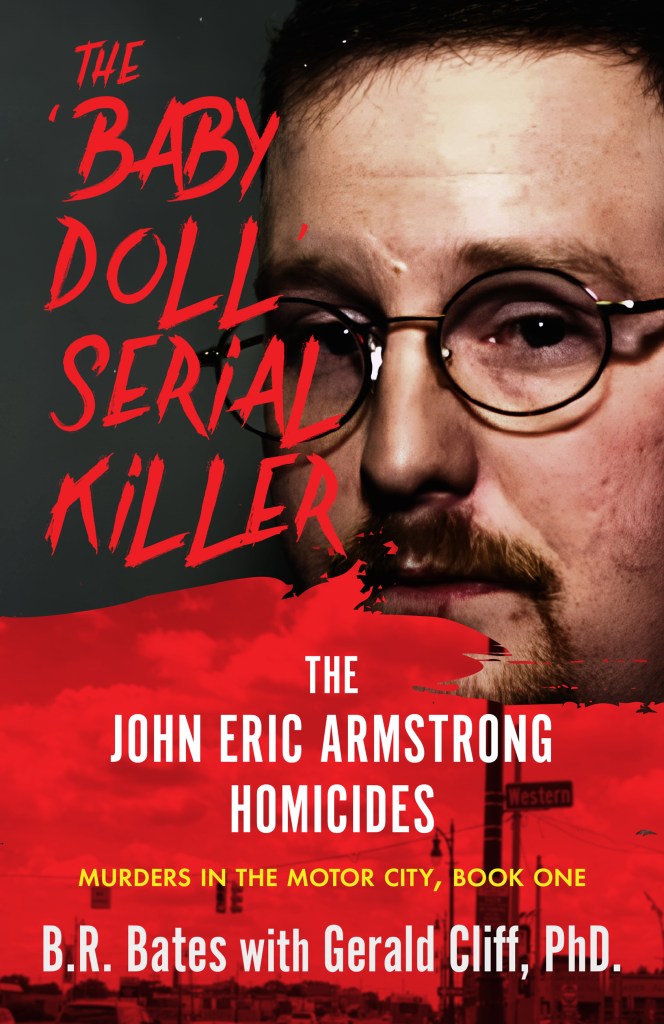
B.R. Bates: The true-crime books are “The ‘Baby Doll’ Serial Killer: The John Eric Armstrong Homicides” and “The Crack City Strangler: The Homicides of Serial Killer Benjamin Atkins.” They explore the cases of these two convicted serials. Armstrong was known to kill five women in Detroit, but he also assaulted five others who survived, which is an unusual ratio for a serial. The thing that people tend to remember about this case is that after he was arrested in Detroit in April 2000, he confessed to killing 10 others around the world while traveling with the U.S. Navy aboard the USS Nimitz. That idea of a traveling naval killer has been adopted as a storyline for a few different TV crime dramas, inspired by this case.
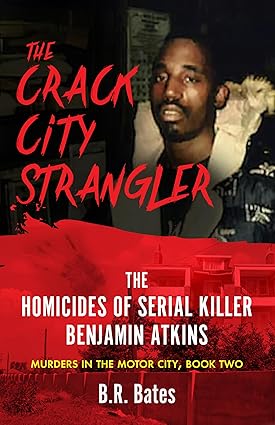
In the other book, Atkins was dubbed the country’s fastest-moving serial when he was arrested in August 1992. He was known to kill 11 women in a timeframe that could have been as short as six months. The local papers at the time were calling him the Woodward Corridor Killer and the Woodward Strangler, but a paper in Canada – before he was identified and arrested – referred to this killer terrorizing Detroit as the Crack City Strangler. That’s an interesting perspective for them to take, and my publisher felt that really captured it, so thus the title of the book. I love Detroit and would never think of it as “Crack City,” but from a sociological perspective, I guess it was an interesting way in which this case was viewed at the time. Crack was a significant part of this case.
Carol: I’m a fan of true stories and suspense novels, so I picked up your book, The ‘Baby Doll’ Serial Killer on Kindle. I’ve started reading it. Your details and the interviews with family members of the victims are fascinating.
Now for some questions our readers want to know:
1. Are you a night owl or morning person?
I am definitely a morning person. I can get up and go, and I do my best work early in the day. That’s how I’ve always been. I wind down in the evening, maybe watching a little TV then crawling into bed with a book around 8 or 8:30 p.m., where I read until 9:30 or 10 p.m. Then I’m out! If I am ever away from home past 10 p.m., boy, am I struggling! LOL.
2. Do you experience writer’s block? What do you do to get through it?
Believe it or not, I never get writer’s block. I can always write. It’s like breathing to me. I always see writing as getting your thoughts onto the page, not worrying about it being perfect, and refining it later. I think some writers get bogged down – maybe just subconsciously – in the idea that it has to be perfect at the get-go. That paralyzes them. I learned in journalism school that you just start writing, because there’s an editing process, so don’t worry about perfection. Start writing and let it flow, then work out what needs to be worked out later. That’s how I advise people, because I am always hearing from people who want to write a book. It seems like it’s human nature, to want to write a book. But I’ve heard from some folks who don’t know how to start it. I always tell them, start anywhere – start in the middle, if you want. If you know you want to include a certain story or bit, write that first, even if it goes in the middle. Just get it down, then go back and write the beginning, or the end. Just start writing, and the wonderful thing about Microsoft Word (and hey, I first learned on an actual typewriter all those years ago!) is that you can go back and edit so easily! You can copy and paste, you can delete. So just write.
Carol: These are great tips. I’m one of those writers who want to get it right the first time, so I can take this advice to heart.
3. Were there any surprises that came up as you wrote your story?
I think the thing that surprised me the most about my research into these two serial killers was how much I related to the victims. I knew I wanted to make these books very victim-centric, and that’s why they both begin with chapters focusing on each one of the victims. Beyond that, though, I am the same age that many of the victims would be right now, even though these two killers operated at different times. It was very much a case of “there but by the grace of God go I,” because my upbringing was not the best. There could have been a wrong turn or two in my life that sent me in that direction. These were women living at risk on the street. Most of them were drug-addicted. They were not out there by choice. They were there because of circumstances, and often it was circumstances beyond their control.
These females present a challenge to the reader, and I hate to say that many people fail that challenge. Do we value all human life, or just the life that fits with our sense of right and wrong? Does the Lord love everybody? Did He die for everybody? Was He maybe punishing them for their life choices? These are tough questions, and I think we resist confronting them on a conscious level. We don’t realize when we’re judging, half the time.
One of the survivors of Armstrong, her name is Zelda, is a true champion for the Lord these days. She lives in victory. She knows she has been delivered, and she sings it all day long. She witnesses. She touches other people’s lives. She’s the one I think of as a true success story, because she knows exactly what she was delivered from. It’s like the parable in Luke 7 about the person who was forgiven for the greatest debt. I’m very inspired by that. I know another survivor of Armstrong who has really struggled over the years. She’s a friend of mine now, and I hear from her often, and I pray for her (and I hope readers will, too). I believe the Lord can work just as strongly in her life. I have also become a friend of one of Atkins’ survivors, and she is perhaps somewhere in the middle. She is strong, but it hasn’t been easy for her. But the greatest challenges have the greatest rewards, right? I think for me the biggest reward of doing these two books has been getting to know these three survivors, who have, in ways large and small, turned their lives around and made something different from them, despite whatever circumstances.
Carol: It’s amazing that you have gotten to know the survivors during the writing process. I’m glad they are finding their paths to healing. We can all learn something positive from their stories.
4. Do you reward yourself when a book is finished? If so, what is your favorite treat?
You know, I do reward myself when there has been an accomplishment, or when something good has happened. I used to reward myself each time I moved up to a better job through my 20s and 30s. When I got my job at The Detroit News, I went to the mall and bought a black leather biker-type jacket at the Wilson leather shop. I’ve gone to the Tiff and Co. at Somerset mall in Troy to buy myself something as a reward. I think that’s important. I have a strong work ethic – I can work, work, work. And I think to reward yourself is a reminder to slow down and smell the roses, as they say. To take stock and let your foot off the gas once in a while, because sometimes you can drive yourself too hard.
5. What are your three favorite books?
The most life-changing book I’ve read is the Bible, first and foremost – I have read it over and over again, at a slow rate, about a chapter a day, throughout my life. And I alternate between different Bibles. My boss at my job in D.C. gave me a chronological Bible, and that’s a really interesting way to read the Scriptures – I’ve gone through that Bible a couple times. I have various translations of the Bible, and I recently got a Catholic Bible and an Ethiopian Bible. I think when I finish the latest translation I’ve been reading, I’m going to start the Ethiopian Bible, because I’m intrigued to discover what it has that my traditional Bible does not, and why. Same thing with the Catholic Bible – I’ve never read those extra books it has, since I grew up Protestant. I’ve always been curious about them.
As far as other books, I was profoundly affected and awed by these two books when I read them for college literature courses: “Notes from Underground” by Dostoevsky and “The Stranger” by Camus.
And our final question from readers, if you didn’t write books, what would you do for a living?
If I had not gone into journalism in college, and if I had not been writing all these years, I would have gone into the psychology field. Psychology, and even sociology, have always deeply fascinated me. I love studying people and why they do the things they do. I took a couple courses in college, and I actually got out those old college textbooks a few months ago and read them over. (Yes, reading a textbook when I didn’t have to, LOL.) I have often in my life cited the basic psychological terms I learned in those courses, and I know they have informed my creative writing, if not my true-crime writing, as well.
Carol: I’ve very much enjoyed our interview and getting to know about you as an author. I know my readers will want to find out more about you and your books.
Before we go, where can readers find you online?
I have a website at BRBates.com, and I do a blog at br-bates.blogspot.com, where I do a series I call “Killer Comparisons” – I compare another serial killer in our cultural history with one of the two Detroit serials I have researched. I find great value – from that psychological perspective that I love so much – in seeing how the backgrounds of these serials are similar or different. It’s all about answering the million-dollar question of why they cross that line to take human life. Is it nature or nurture? Those are the ideas I tackle with Killer Comparisons.
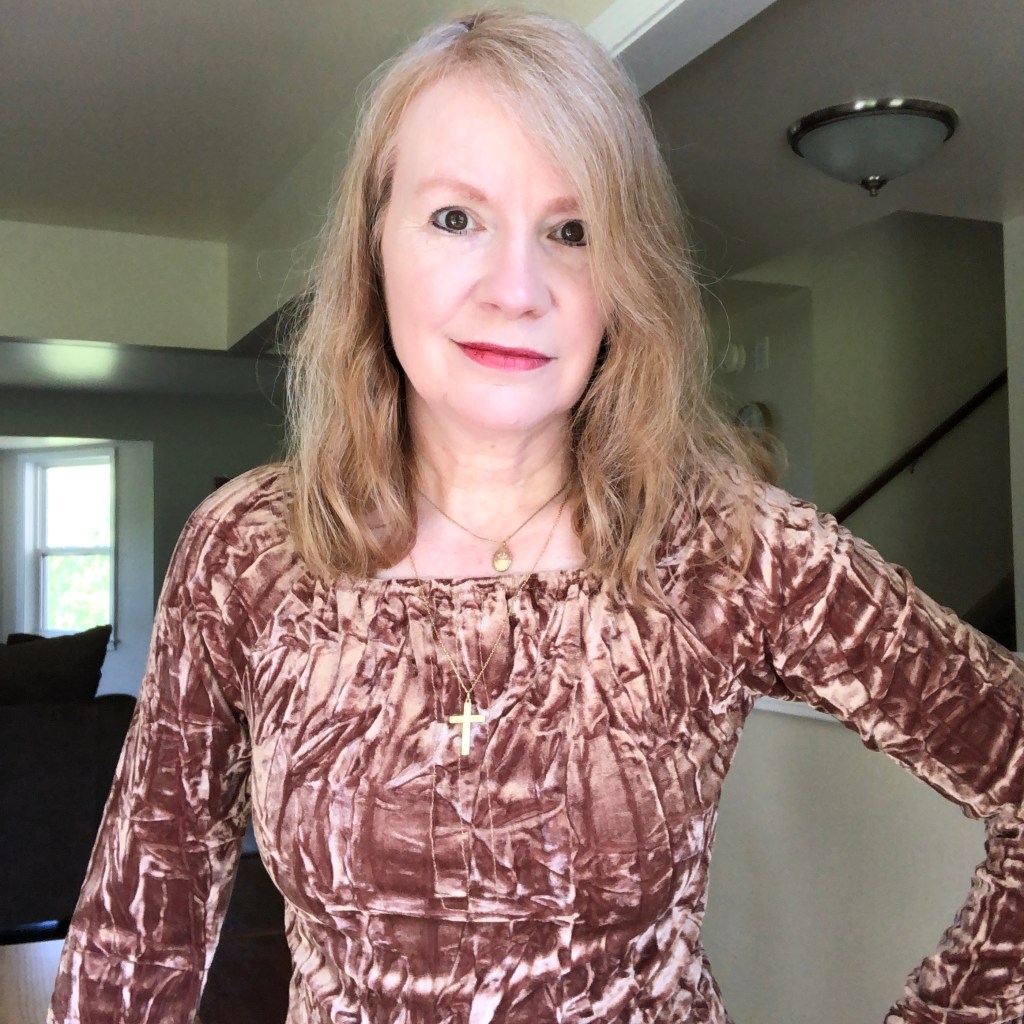
Good morning. Today I’m interviewing author Katy Eeten.
I became acquainted with Katy a few years ago. She is one of my favorite Christian authors.
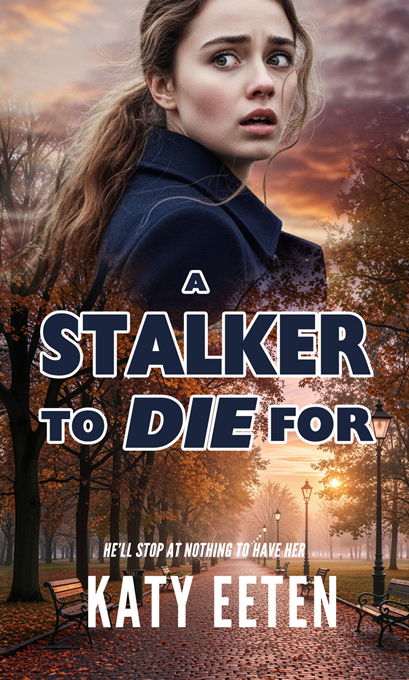
Katy, thank you for joining me on my blog. I’m really excited to talk about your new release, A Stalker to Die For.
But first, tell us a little bit about yourself.
I’ve lived in southeast Wisconsin most of my life, which is where I currently reside with my husband and our two teenage sons. I work full time as a Senior Office Administrator at a large corporation, but I do my best to squeeze in writing off hours. A Stalker to Die For is my sixth published book and my first attempt at suspense. My other books are all contemporary Christian romances, including three Christmas novellas. When I’m not working or writing, I enjoy playing board games, baking, taking walks, and spending time with my family.
Your new book, A Stalker to Die for, releases today.
What is the book about?
Ashley Morris thought the worst part of online dating was awkward small talk. She was wrong.After one disastrous date, a man named Nick won’t take no for an answer. His calls and texts escalate into threats, break-ins, and a terror that shadows her every move. Desperate for safety, Ashley hires Jackson Russo—a talented painter with a kind heart and a protective streak—to renovate her home. But as their friendship deepens into something more, Nick’s obsession turns deadly.Caught between a stalker’s rage and a love she never expected, Ashley must trust God’s protection and her own instincts to survive. With Jackson by her side, she’ll fight for her life—and for a future worth living.A faith-filled romantic suspense with a slow-burn, closed-door romance and a guaranteed happily ever after. No graphic content. Perfect for fans of Lynette Eason, Dani Pettrey, and Dee Henderson.
I love how you weave your faith into the fabric of your stories. I can’t wait to read this one!
Now let’s do a Q&A so our readers can find out more about you and your writing style:
Are you a night owl or morning person?
Sadly, I don’t consider myself either. Maybe I’m more of an afternoon person? Ha! I typically fall asleep on the couch before 10 PM while watching TV with my husband. And on the weekends, I love to sleep in—although to me, that means 8 AM. I don’t often sleep later than that, and during the week I’m up by 6 AM to get ready for work, so maybe that makes me a morning person? I guess it depends on what you consider early.
Who was your favorite character to create?
Although she’s a very minor character, I very much enjoyed Ashley’s friend Stacie. She’s the comedic sidekick that eases the mood when things get too tense, but she’s also a faithful friend that truly wants the best for Ashley.
How did you come up with the names of your hero and/or heroine?
Jackson is the name of one of my sons. I had already used my other son’s name (Lincoln) in my novella Christmas in Meadow Creek, so I thought I might as well make it fair, lol. And the name Ashley is just one of those names I’ve always wanted to use in a story but haven’t yet. I think the names pair together quite nicely
Are you a plotter or a panster?
I would say I’m a mix of the two! I definitely don’t have the entire story mapped out, outlined and neatly tied together before I start writing, but I do try to have the broad strokes in place before I start fleshing out the details. But the plot often takes a twist or turn I didn’t originally intend as I proceed with writing the detailed scenes. I would love to see what happens in the mind of a true plotter and a true panster as they work through their process!
If you didn’t write books, what would you do for a living?
I feel that I have incredible attention to detail. So, if I could make enough money doing it, I would love to be a proofreader. That way, I’d get to read all sorts of books for a living while making minor edits and helping other authors put their best foot forward.
Do you experience writer’s block? What do you do to get through it?
All the time! I wish I had a surefire method for working through it, but I usually just walk away until I’m feeling inspired again. Since writing is just a side hobby for me and not my full-time job, I can afford to go long bouts without writing. Eventually, the creative muse returns and then I try to cram as much writing in as possible.
How can readers find your new book?
And last question, tell us what’s next for you as an author?
I am working on a Women’s Fiction that’s told in first person present tense from the alternating points of view of four former college friends navigating life, careers, and relationships. It’s been a long time in the making, but I’m excited at how it’s shaping up and hope to get it out in the world someday (and someday soon would be even better).
It was great chatting with you, Katy. Before we go, where can readers find you online?